
There’s a certain feeling you get in an Irish cottage that’s hard to explain until you’ve been in one.
It’s not about design. It’s not about trends.
It’s the warmth. The quiet. The sense that everything in the room belongs there.
Light comes in softly through smaller windows. Walls feel solid. Nothing is overly styled, yet everything works together.
A lot of people try to recreate this look, but it often ends up too modern or too polished. The space looks good, but it doesn’t feel right.
That’s the missing piece.
In this guide, you’ll see ten Irish cottage interior ideas that actually work — and simple ways you can bring that same warmth into your own home without overcomplicating it.
If you like cosy interiors, it’s worth saving this and coming back to it when you’re making changes.
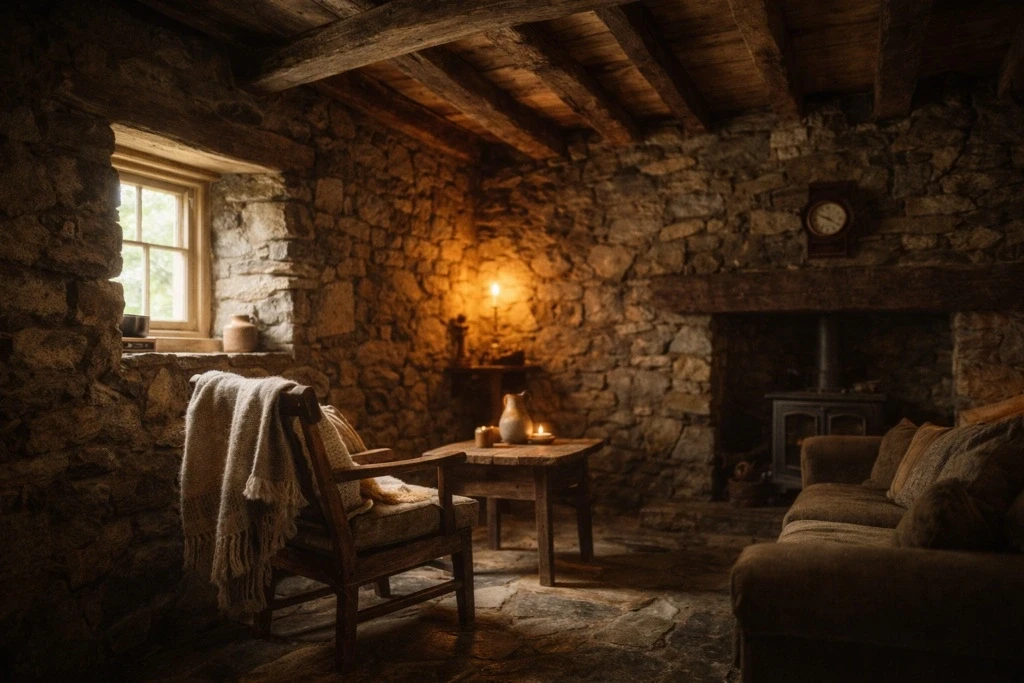
Walk into an old Irish cottage and the stone walls stand out straight away.
They’re not perfect. They’re uneven, textured, and full of character. That’s exactly why they work.
Traditionally, cottages were built using whatever stone was available locally. That gave each home a slightly different look.
Timber beams add another layer. They break up the ceiling space and make the room feel more grounded.
You don’t need to rebuild your home to get this feel.
A single stone feature wall can shift the whole room. Limewash paint can soften modern walls and give that slightly aged look. Faux beams, if kept simple, can also add depth without looking forced.
The key is restraint. One strong feature is enough.
When you get this right, the room instantly feels older, warmer, and more settled.
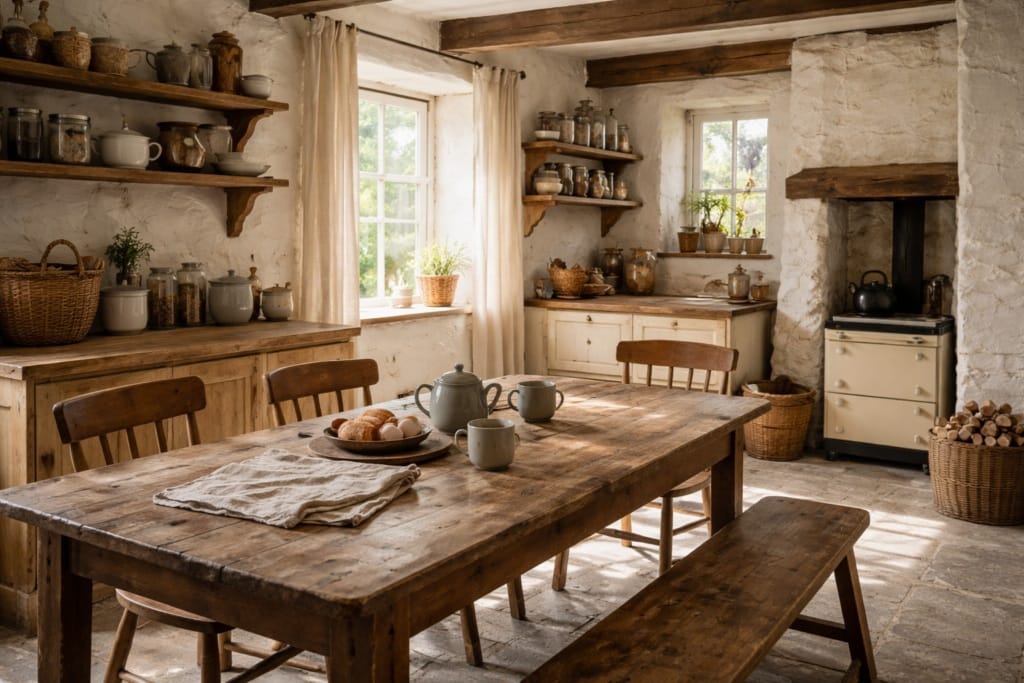
In most Irish cottages, the kitchen wasn’t just a place to cook.
It was where everything happened.
People gathered there. Meals stretched longer than planned. The fire or stove kept the room warm even on cold days.
That sense of warmth is what you want to recreate.
A stove or fireplace helps, but it’s really about the feeling it creates. Even an electric stove can work if it becomes the centre of the space.
Materials matter here. Wood, stone, and simple finishes work better than anything glossy or overly sleek.
Keep the layout practical. Avoid over-designing it.
Open shelves, a solid table, and a few well-used pieces will feel more authentic than a perfectly fitted modern kitchen.
If the kitchen feels like a place people want to sit and stay, you’re on the right track.
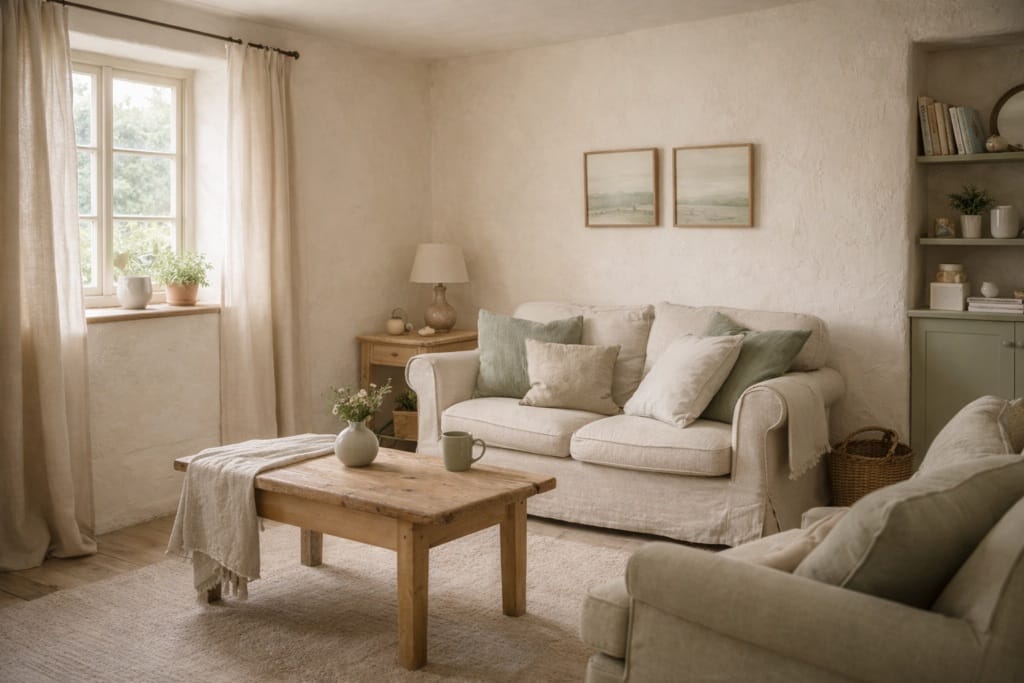
The colours in Irish cottage interiors don’t shout.
They settle.
Most are drawn from the landscape — soft greens, muted greys, warm creams, and gentle earth tones.
These colours feel calm because they’re familiar. You see them outside every day in Ireland.
Bright white walls can feel too sharp in this setting. They reflect too much light and take away from the softness.
Warmer tones sit better in the space.
Cream walls, sage green accents, and slightly warm greys help create a relaxed feel.
The goal is not to impress. It’s to make the room easy to live in.
When colours feel natural, everything else in the room blends together more easily.
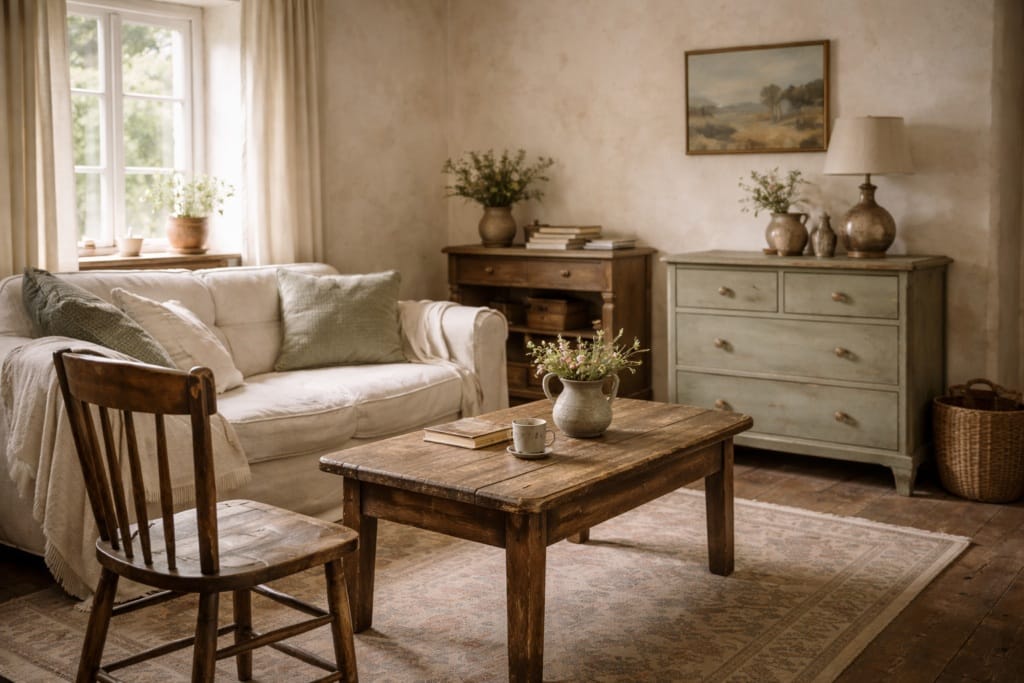
One thing you rarely see in a true cottage interior is a full set of brand-new furniture.
It feels off straight away.
Older furniture brings a sense of history. Scratches, worn edges, and slight imperfections all add to the character of the room.
You don’t need to go all in.
One or two older pieces is enough to change the feel of a space. A solid wooden table, a chair with a bit of wear, or a second-hand cabinet can anchor the room.
Mix these with newer pieces so the space still feels practical.
That balance is important. Too much old can feel staged. Too much new feels flat.
When you get it right, the room feels like it has grown over time rather than being put together in a day.
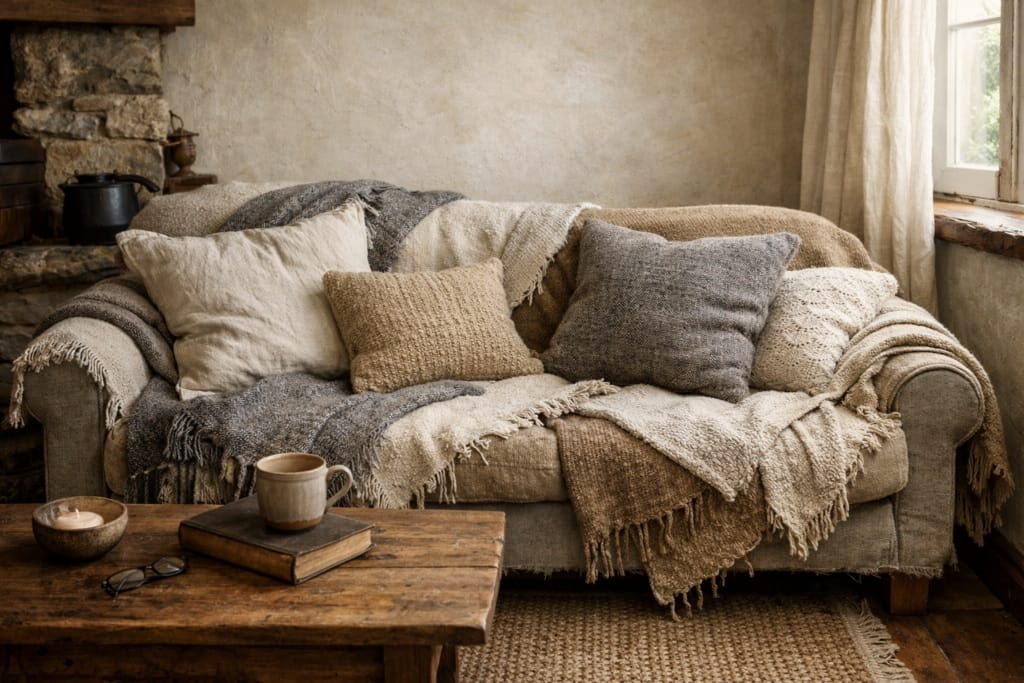
What makes a space feel cosy is not decoration. It’s texture.
Irish cottage interiors rely heavily on layers.
You’ll notice soft throws over chairs, rugs on wooden floors, linen curtains, and cushions that look used rather than styled.
These layers soften the space.
Natural materials work best. Wool, linen, cotton, and wood all bring a quiet warmth.
You don’t need bold colours or patterns. In fact, keeping the colour palette simple allows the textures to stand out more.
Even adding a thick wool throw and a textured rug can change how a room feels.
Cosy is built slowly, layer by layer.
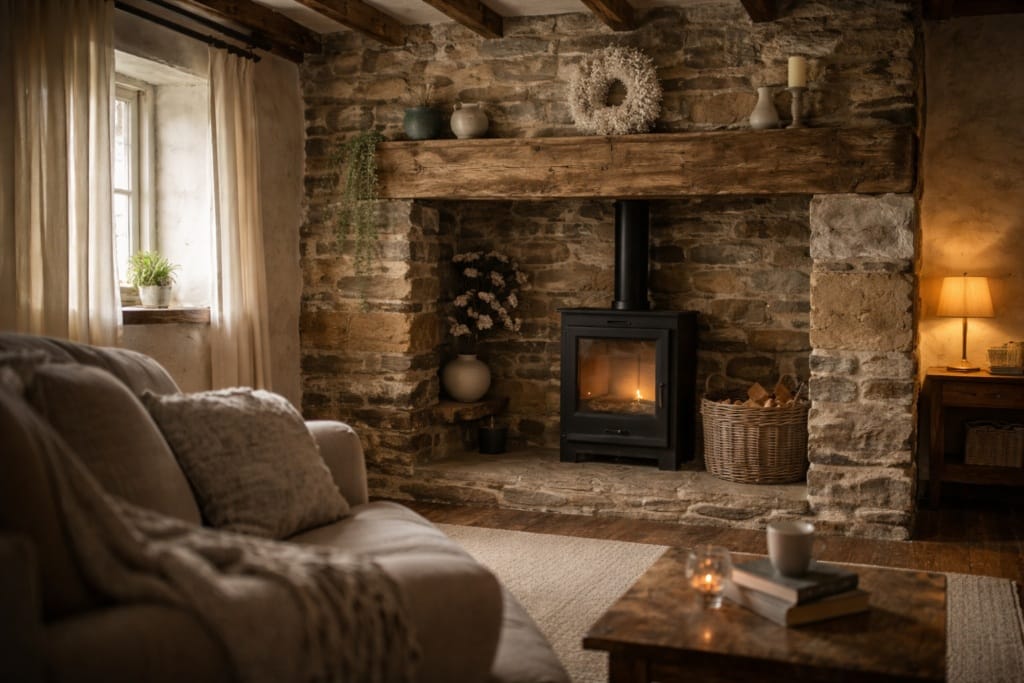
Lighting plays a bigger role than most people think.
Irish cottages were never designed with bright, overhead lighting. The light is softer, often coming from smaller windows or simple lamps.
That softness is part of what makes the space feel calm.
You can recreate this easily.
Use warm bulbs instead of bright white ones. Add table lamps or floor lamps instead of relying on ceiling lights. Let natural light filter through light curtains rather than blocking it out.
Avoid anything too harsh or clinical.
When the lighting is right, everything else in the room feels more relaxed.
It’s one of the quickest changes you can make.
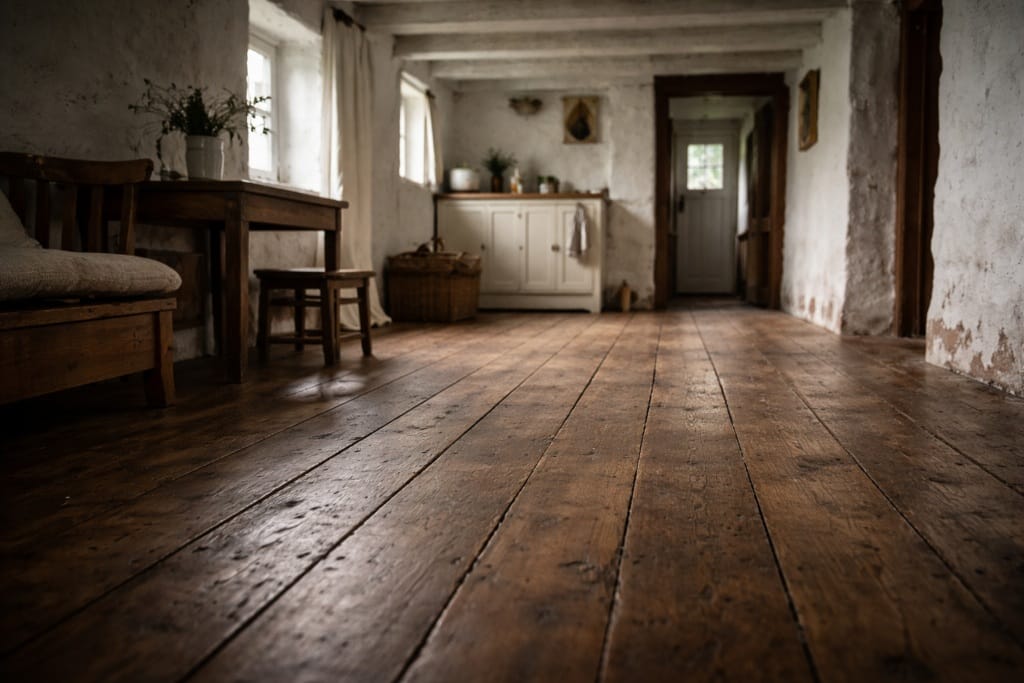
In a cottage, the floor is part of the story.
It’s not meant to look perfect.
Natural wood works best. Something with a bit of grain, a bit of variation, and even a bit of wear.
That wear doesn’t take away from the space. It adds to it.
Highly polished or glossy floors can feel out of place. They reflect too much and look too new.
Matte or lightly finished wood sits better.
If you already have wooden floors, don’t worry about keeping them flawless. A few marks or signs of use actually help the space feel more real.
It’s about comfort, not perfection.
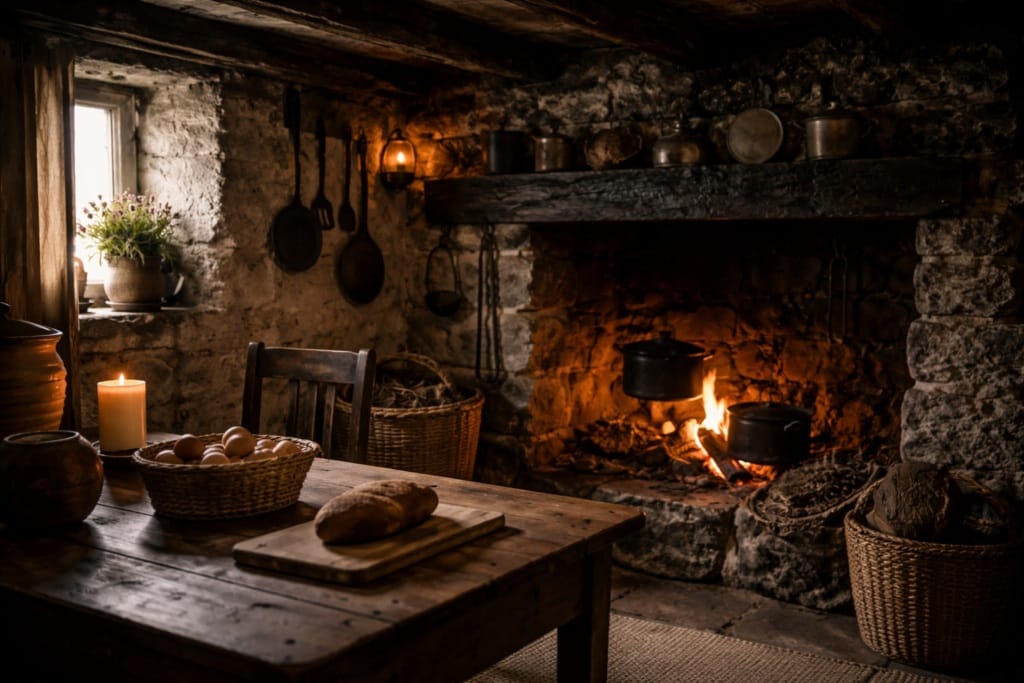
Cottage interiors are not filled with random decor.
Most items feel like they belong.
Handmade pieces work especially well here. Pottery, woven baskets, simple textiles, and small details that feel personal.
Irish craft pieces fit naturally into this style. They add a quiet connection to place without being obvious.
The key is to avoid clutter.
It’s better to have a few meaningful pieces than shelves full of items that don’t say anything.
Each piece should feel like it has a reason to be there.
That’s what keeps the space calm and grounded.
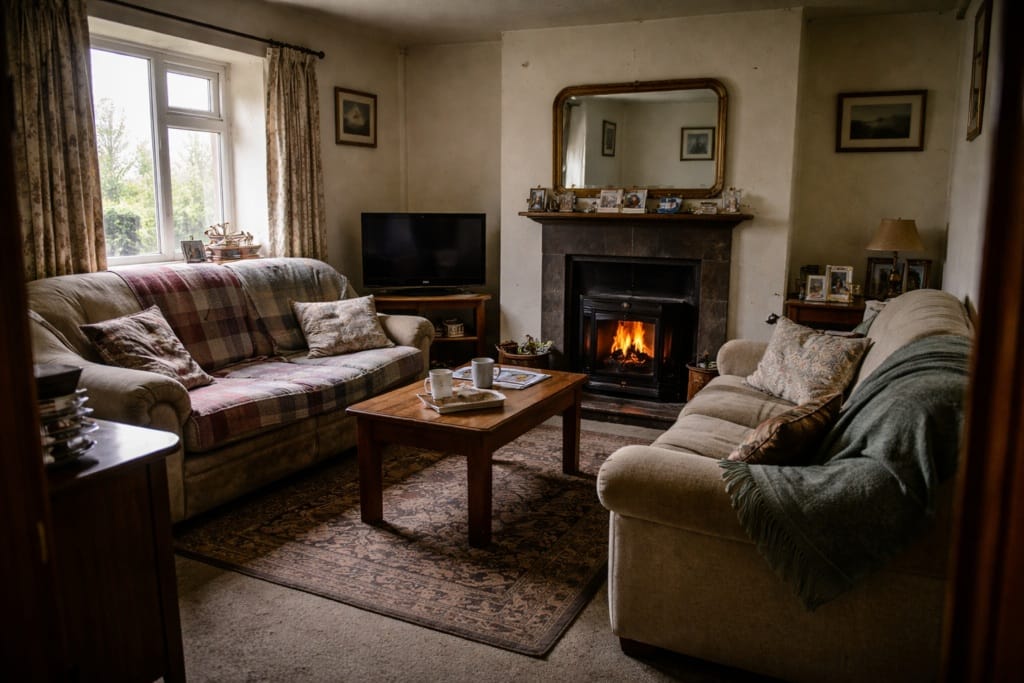
A cottage living room is designed for comfort, not space.
Furniture is usually arranged closer together. The room feels more connected.
There’s often a central point — a fire, a table, or simply a place where people gather.
Large open layouts don’t create the same feeling.
You can change this without changing the room itself.
Bring furniture closer together. Add a rug to anchor the space. Use softer lighting.
Even a small adjustment in layout can make the room feel more inviting.
It should feel like a place where you naturally sit down and stay.
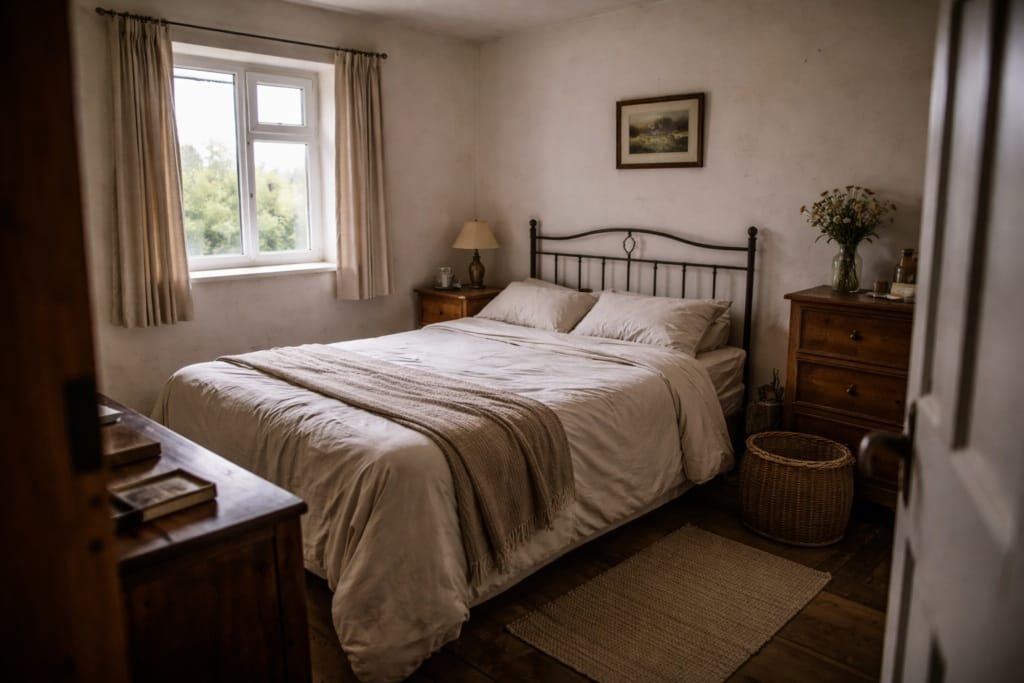
Cottage bedrooms are simple.
There’s no need for a lot of furniture or decoration.
Soft bedding, neutral colours, and a calm atmosphere do most of the work.
The goal is rest, not style.
Light linens, warm tones, and a few carefully chosen pieces create a space that feels easy.
Avoid overfilling the room.
If something doesn’t add to the calm feeling, it’s better left out.
This is one of the easiest spaces to get right, simply by doing less.
Irish cottage interiors are not about getting everything perfect.
They’re about how a space feels when you’re in it.
Warm. Comfortable. Lived in.
You don’t need to change everything at once.
Start with one idea. A softer colour. A better light. A piece of furniture that adds character.
Build it slowly.
Over time, the space begins to settle. It feels more natural. More like somewhere you want to be.
And that’s when it starts to feel like a true cottage.
If you’re building that kind of space, adding Irish-inspired artwork can help tie everything together and bring a sense of place into your home.
If this gave you ideas, save it and come back to it when you’re ready to make a change.